
Come Back to Your Senses: Forest Therapy
Seventeen
ways
into
the woods.
A forest therapy walk in seven practices, in the order guides use. Then ten more that go beyond the walk.
Cross a threshold, wake up your senses, slow down, sit, share tea and cross back. Every practice has a guided voice mode, a diagram, the research behind it and one rule. No forest required. Four are open here. The other thirteen unlock free with your email.All seventeen are open, with the walk planner and the pulse log.
Before you start, take one slow breath in through your nose and a longer one out. That’s already the first practice working.
The shape of the walk.
One loop, seven stops, in the order forest therapy guides use. The ten spots off the trail go beyond the walk. Pick any marker to see what happens there.
Today in the woods.
NeuroSomatic Yoga · Forest therapy
Come Back to Your Senses
A forest therapy walk in seven practices, in the order forest therapy guides use: cross a threshold, wake up your senses, slow down, accept an invitation, sit, share tea, and cross back. Do them as one walk, or one at a time on any patch of green. Then ten practices that go beyond the walk: listen, notice, give something back, look for awe, move, measure, practice kindness, grow something, make something beautiful, and rest. Four are open here: Cross the Threshold, Pleasures of Presence, Sit Spot and The Soundwalk. The other thirteen unlock free with your email.
Before you start, take one slow breath in through your nose and a longer one out. That's already the first practice working.
The shape of the walk
- Cross the ThresholdThreshold in · 1 min
- Pleasures of PresenceThe senses · 5 min
- What's in MotionSlow walk · 15 min LockedUnlock all 17 free: enter your email below, or comment FOREST on Instagram.
- Hands on the Living WorldAn invitation · 2 min LockedUnlock all 17 free: enter your email below, or comment FOREST on Instagram.
- Sit SpotSit spot · 20 min
- The Tea CircleTea · 5 min LockedUnlock all 17 free: enter your email below, or comment FOREST on Instagram.
- Bring It HomeThreshold out · 2 min LockedUnlock all 17 free: enter your email below, or comment FOREST on Instagram.
Beyond the walk
- The SoundwalkListening · 7 min
- Notice NatureNoticing · 2 weeks LockedUnlock all 17 free: enter your email below, or comment FOREST on Instagram.
- The Give-Back WalkStewardship · 20+ min LockedUnlock all 17 free: enter your email below, or comment FOREST on Instagram.
- The Awe WalkAwe · 15 min LockedUnlock all 17 free: enter your email below, or comment FOREST on Instagram.
- Green FlowMovement · 8 min LockedUnlock all 17 free: enter your email below, or comment FOREST on Instagram.
- Measure the ForestMeasuring · 30 min LockedUnlock all 17 free: enter your email below, or comment FOREST on Instagram.
- Kindness in the WoodsCompassion · 9 min LockedUnlock all 17 free: enter your email below, or comment FOREST on Instagram.
- Grow SomethingGrowing · 20 min LockedUnlock all 17 free: enter your email below, or comment FOREST on Instagram.
- Small BeautyBeauty · 20 min LockedUnlock all 17 free: enter your email below, or comment FOREST on Instagram.
- Canopy RestRest · 13 min LockedUnlock all 17 free: enter your email below, or comment FOREST on Instagram.
Do it as one walk
In the full library, practices 1 to 7 run as one guided walk of just under an hour, usually less than a mile. Slow is the point.
Or one at a time
Each practice stands on its own. Two minutes at lunch counts. So does twenty minutes on your back step.
No forest required
A park, a backyard, one tree on your street or a window all work. Dress for the weather, tell someone where you're going, and skip anything that hurts.
Practice 1 · The threshold in
Cross the Threshold
Your body made it to the park. Did you?
A one-minute ritual at the edge of any green space, so the rest of you arrives too.
You're not bad at slowing down.You never marked the start.
Most days have no doorway in them. Work runs into errands runs into scrolling. A threshold is a doorway you make on purpose.
The practice
- 1
Find your line
Pick a natural edge: where pavement turns to grass, a gap between two trees, or a stick you lay across the path.
- 2
Set something down
Stand at the line and take three slow breaths. On each exhale, name one thing you're leaving on this side: the inbox, the list, the argument.
- 3
Step across slowly
Take one deliberate step over the line. Pause on the other side and feel your feet. You've arrived. Everything after this is the walk.
At a glance
Stop. Set it down. Step across.

The invitations
- What are you leaving on this side?
- What would you like to notice over there?
- How does the ground feel once you've crossed?
Ask yourself one at a time. Answer silently. There are no wrong answers.
Why it works
The pause is part of it
In a pre-registered lab study, people practiced a made-up ritual at home for a week, then performed it before a demanding attention task. Afterward their brains reacted less sharply to their own mistakes, the pattern you would expect if ritual takes the edge off anxiety. Their scores did not change. And across forest-bathing studies, cortisol was already lower in the forest groups before the walk began, a sign that anticipation does part of the work.
Hobson, Bonk & Inzlicht, PeerJ (2017) · Antonelli, Barbieri & Donelli, International Journal of Biometeorology (2019)
The one rule
Stop at the line.
Don't stroll through it. The stop is the ritual. If all you have time for is one breath, take one breath.
Keep this for the next walk you spend on your phone.
Practice 2 · The senses
Pleasures of Presence
When did you last hear a bird on purpose?
Five minutes standing still, one sense at a time. It's how every forest therapy walk begins.
You're not disconnected.You're running on one sense.
Most days your eyes and a screen do all the work. This practice hands the job to your other senses, one at a time, until your whole body is taking in the place.
The practice
- 1
Smell the air
Stand or sit comfortably and close your eyes if that feels okay. Breathe in through your nose. Notice what the air smells like: damp, cold, green, or nothing at all.
- 2
Listen, then feel
Find the farthest sound you can hear, then the closest. Then feel the air on your face and hands. Is it moving? Is it warmer or cooler than you expected?
- 3
Open your eyes last
Open them slowly, as if for the first time. Let your gaze rest on whatever draws it. Don't name it yet. Just look.
At a glance
One sense at a time.

The invitations
- What are you noticing?
- Which sense is the loudest right now?
- What's here that you walked past yesterday?
Ask yourself one at a time. Answer silently. There are no wrong answers.
Why it works
Nature sounds help you come down
After a stressful math test, 40 people listened to birdsong and a fountain, or to traffic. Skin conductance, a sweat-gland sign of the body's alarm, tended to settle faster with the nature sounds. Across forest-bathing trials, the clearest short-term drop was in anxiety.
Alvarsson, Wiens & Nilsson, Int J Environmental Research and Public Health (2010) · Kotera, Richardson & Sheffield, Int J Mental Health and Addiction (2022)
The one rule
Go slower than feels useful.
Give each sense a few full breaths before you move on. If closing your eyes doesn't feel safe, rest your gaze on the ground instead.
Keep this for the next time you're outside but not really there.
Practice 5 · The sit spot
Sit Spot
Sit in one spot for 20 minutes. See what shows up.
Twenty minutes, one spot, nothing to do. Come back every week and it starts to feel like yours.
You're not wasting time.You're letting the place move first.
When you go still, the place starts moving again: birds come back, squirrels carry on, the light shifts. Keep returning to the same spot and you'll see what changes with the seasons, and with you.
The practice
- 1
Choose your spot
Pick a place close enough to visit often: a park bench, a tree in your yard, a step by a window. Close beats beautiful.
- 2
Settle and stay
Sit for about twenty minutes. No phone, no book, no conversation. Let your eyes and ears wander. When you get restless, stay a little longer.
- 3
Come back
Return to the same spot each week, in every season. Each time, notice one thing that's different from your last visit.
At a glance
One spot. Every week. Every season.

The invitations
- What came back once you went still?
- What's changed since your last visit?
- What is this place doing today?
Ask yourself one at a time. Answer silently. There are no wrong answers.
Why it works
20 to 30 minutes is the sweet spot
For eight weeks, 36 city dwellers spent time somewhere that felt like nature, with no phones or conversation. Their cortisol fell faster than its normal daily decline. The best return per minute came at 20 to 30 minutes, sitting or walking.
Hunter, Gillespie & Chen, Frontiers in Psychology (2019)
The one rule
Stay past the itch.
The urge to get up usually comes early. Wait it out. And dress for sitting, not walking: you cool down fast when you're still.
Pick your spot today.
Practice 8 · Beyond the walk · Listening
The Soundwalk
There's a whole orchestra outside. You've been tuning it out.
Close your eyes, count every sound, map where each one comes from, then walk slowly and listen to the map change.
You're not bad at being still.Your ears never got the invitation.
Most of us live inside noise we've learned to tune out. Tuning back in, on purpose, is one of the fastest ways out of your head.
The practice
- 1
Close your eyes
Stand or sit somewhere safe. Close your eyes or lower your gaze, and take three slow breaths.
- 2
Count the sounds
Count every separate sound you can hear: birds, wind, water, leaves, even traffic. Try to reach ten.
- 3
Map them, then walk
Point to where each sound comes from: near, far, left, right. Then walk slowly and listen to the map change.
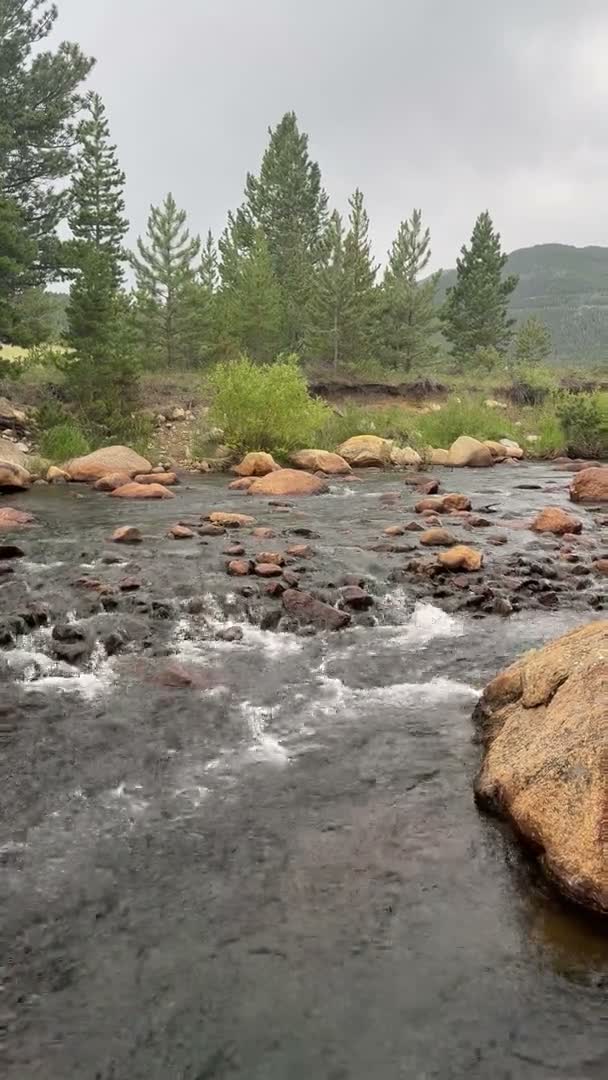
No creek nearby?
Borrow this one.
A mountain stream, on a loop. Close your eyes and count how many sounds are hiding inside the one sound.
In the review cited below, water sounds did the most for health and mood.
At a glance
Close. Count. Map.

The invitations
- What's the quietest sound you can hear?
- Which sound would you miss if it stopped?
- What's under the noise?
Ask yourself one at a time. Answer silently. There are no wrong answers.
Why it works
Natural sound calms the body
A review of studies on natural sounds found less stress and annoyance, and better health and mood, in people who heard them. Water sounds did the most for health and mood. Birdsong did the most for stress. And a review of 25 studies found mindful attention practiced outdoors brought medium-sized benefits, bigger in wild places.
Buxton et al., PNAS (2021) · Djernis et al., IJERPH (2019)
The one rule
Don't fight the noise. Find what's under it.
Traffic and planes count too. Let them be there, then listen past them. Close your eyes only while you're standing or sitting still.
Keep this for a day you can't get far from home.
The full library
Thirteen more practices, free.
All seventeen practices with the guided voice mode, the walk planner, the pulse and mood log, and every diagram and study. Enter your email and the library opens right away.
- What's in MotionSlow walk · 15 min · Walk so slowly it feels ridiculous. LockedUnlock all 17 free: enter your email below, or comment FOREST on Instagram.
- Hands on the Living WorldAn invitation · 2 min · Your hands spent all day on glass and plastic. LockedUnlock all 17 free: enter your email below, or comment FOREST on Instagram.
- The Tea CircleTea · 5 min · Don't rush from the trail back to the car. LockedUnlock all 17 free: enter your email below, or comment FOREST on Instagram.
- Bring It HomeThreshold out · 2 min · The walk is over. What are you taking home? LockedUnlock all 17 free: enter your email below, or comment FOREST on Instagram.
- Notice NatureNoticing · 2 weeks · The best nature in your week is on your commute. LockedUnlock all 17 free: enter your email below, or comment FOREST on Instagram.
- The Give-Back WalkStewardship · 20+ min · You've taken a lot from the woods. Time to give something back. LockedUnlock all 17 free: enter your email below, or comment FOREST on Instagram.
- The Awe WalkAwe · 15 min · Your walks have a destination. This one has a feeling. LockedUnlock all 17 free: enter your email below, or comment FOREST on Instagram.
- Green FlowMovement · 8 min · Your yoga mat has four walls. Take it outside. LockedUnlock all 17 free: enter your email below, or comment FOREST on Instagram.
- Measure the ForestMeasuring · 30 min · Don't take my word for it. Take your pulse. LockedUnlock all 17 free: enter your email below, or comment FOREST on Instagram.
- Kindness in the WoodsCompassion · 9 min · You're kind to everyone except the person in your head. LockedUnlock all 17 free: enter your email below, or comment FOREST on Instagram.
- Grow SomethingGrowing · 20 min · Your hands want something to do. Give them dirt. LockedUnlock all 17 free: enter your email below, or comment FOREST on Instagram.
- Small BeautyBeauty · 20 min · You scroll past a thousand pretty things a day. Make one. LockedUnlock all 17 free: enter your email below, or comment FOREST on Instagram.
- Canopy RestRest · 13 min · When did you last look up for ten minutes straight? LockedUnlock all 17 free: enter your email below, or comment FOREST on Instagram.
Rather not give an email? Comment FOREST on any forest therapy post on Instagram and I'll send you the link.
One short practice a week, plus class dates and forest walks first. Unsubscribe anytime.
Rather be guided? Walk with me.
Slow, guided, sensory time among the trees around New Lenox. No hiking pace and no experience needed. Just an invitation to notice.
A guided walk follows the same seven stops as the trail map, at the pace of the group, tea included. Tell me who’s coming and what you want from it, and we’ll plan it from there.
Rob Grigsby · RYT-200 · NeuroSomatic Intelligence practitioner · ANFT forest therapy guide certification in progress